Friction-free. Silent. 1MW from a 14-foot diameter unit. Ships on a standard flatbed — installs in 2–4 days. Three converging innovations make this the most efficient wind turbine ever designed for distributed deployment.
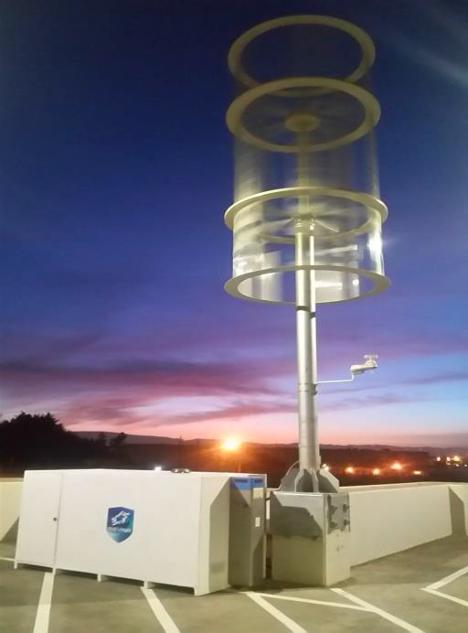
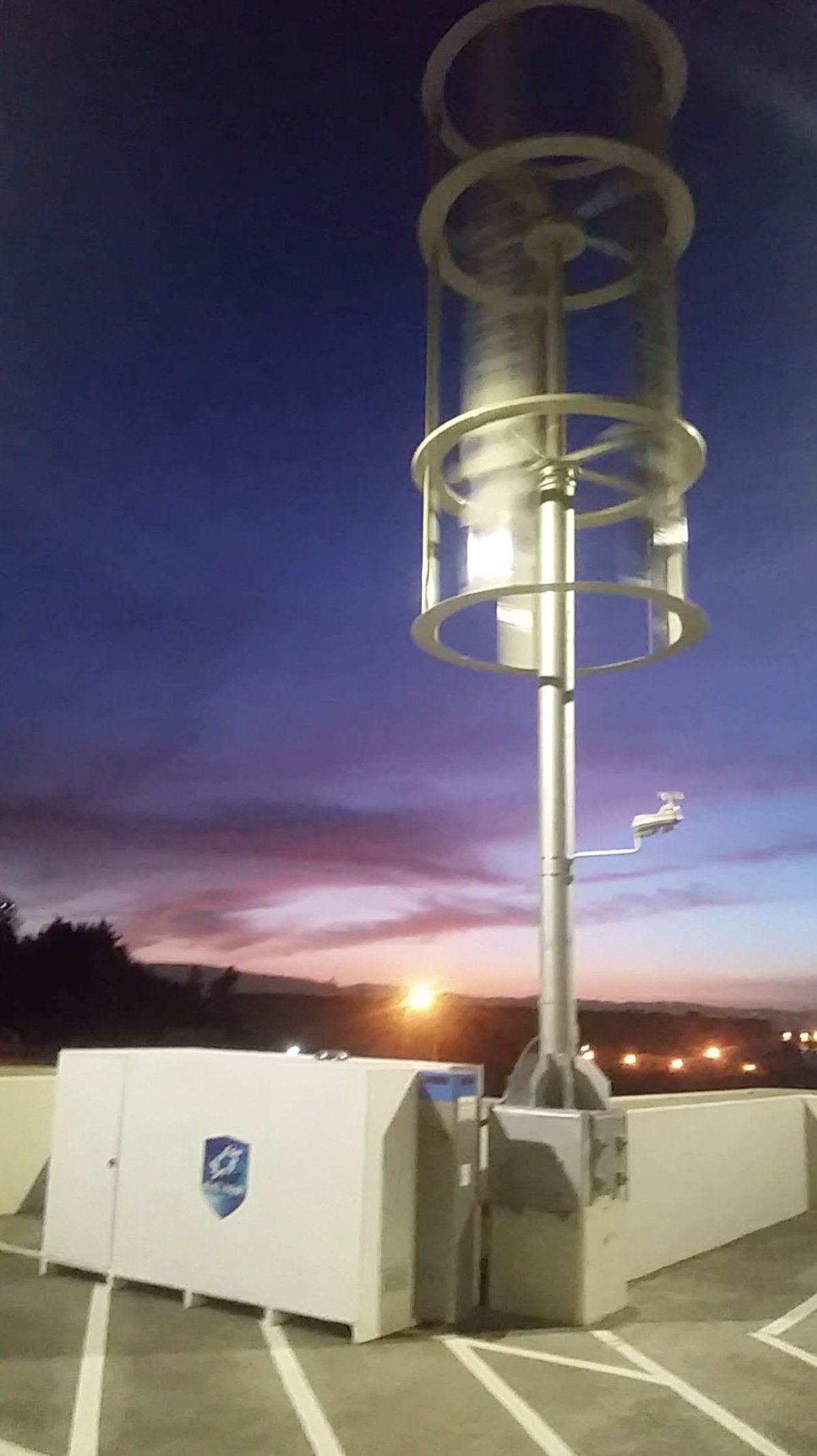
Real deployment footage — handheld anemometer confirms the turbine spinning at multiples of ambient wind speed. No CGI. No renders. This is the turbine working.
Kestrel Skymate anemometer reads 2–7 mph ambient wind · Turbine already spinning at multiples × of wind speed · Proprietary MAG-LEV + EHD system
The Sylentra MAG-LEV turbine self-starts from complete standstill using EHD ionic thrust alone — no motor, no external mechanism, no minimum wind speed. It begins generating power on a perfectly calm day. And it never stops.
High-voltage electrodes embedded in each blade generate ionic thrust — a directed force produced by accelerating ionized air. This thrust is sufficient to begin rotating the turbine from zero RPM with no wind present whatsoever. The turbine essentially creates its own starting condition through applied voltage alone.
Conventional turbines require 7–11 MPH of sustained wind before they produce a single watt. Below that threshold — nothing. This eliminates wind energy as a viable option for the majority of urban locations, rooftops, and sites with variable or low average wind speeds. Sylentra removes that threshold entirely. Any location with any wind — or no wind at all — is a viable deployment site.
Urban rooftops. Indoor industrial facilities. Locations previously assessed as "insufficient wind resource" and written off. Data centers in low-wind regions. Hospitals. Military installations in any climate. The self-start capability doesn't just improve the turbine — it fundamentally expands where wind energy can exist on earth.
"The lowest cut-in speed of any wind turbine ever designed. Not by a margin — by a category. Conventional turbines stop working when the wind slows down. Sylentra started working before the wind arrived."
The Sylentra Gen 1 turbine is the product of three converging breakthroughs — each compounding the last — resulting in 1MW from a 14-foot diameter unit that conventional turbine engineering cannot approach.
The rotor floats on a magnetic field — eliminating mechanical bearing friction entirely. This is the primary source of energy loss, noise, maintenance cost, and mechanical wear in every conventional turbine ever built. Gone.
Blades built from our proprietary composite material — 10× stronger and 94% lighter than steel equivalents. This enables blade geometries previously impossible to engineer and manufacture, capturing energy at wind speeds that stall conventional designs.
5 precision airfoils create a self-reinforcing acceleration loop at 40–50 RPM. Each blade flies into the energized air mass created by the blade ahead — a feedback cycle that exceeds the Betz limit. Captures wind from any direction without yawing. 14ft diameter fits a standard flatbed — no oversize permits.
High-voltage electrodes (10–40kV) embedded in each blade's leading edge ionize incoming air molecules. Trailing edge collectors accelerate the ion flow along the blade surface — energizing the boundary layer, delaying stall, and increasing lift-to-drag ratio. Result: +15–20% power coefficient improvement. Power draw: milliamp range.
Three patents protect EHD-related innovations: App #64/005,720 (boundary layer control), App #64/012,670 (dual-mode self-starting), and App #64/012,674 (blade integration across all materials).
The EHD system runs in two distinct modes. In self-start mode, the actuators initiate rotor rotation from zero RPM — without any wind. The turbine can begin generating power on a dead-calm day purely from the ionic thrust created by the electrodes. Once spinning, it transitions to boundary layer control mode, continuously optimizing aerodynamic efficiency across all wind conditions. This is the reason for Sylentra's 1 MPH cut-in speed — the lowest of any turbine design in existence.
64 stator coils are fixed to the central shaft. 128 NdFeB N52/N55 magnets (480 lbs pull force each) are embedded on the interior of the rotor and spin around them. This creates a second, independent generation surface from the same rotation — adding significant output without additional moving parts or complexity. Combined with the Halbach axial flux generator at the base: three independent generation surfaces in a single turbine.
Three annotated cross-sections and a Halbach array render — from the engineering drawings and CAD models used in production planning.
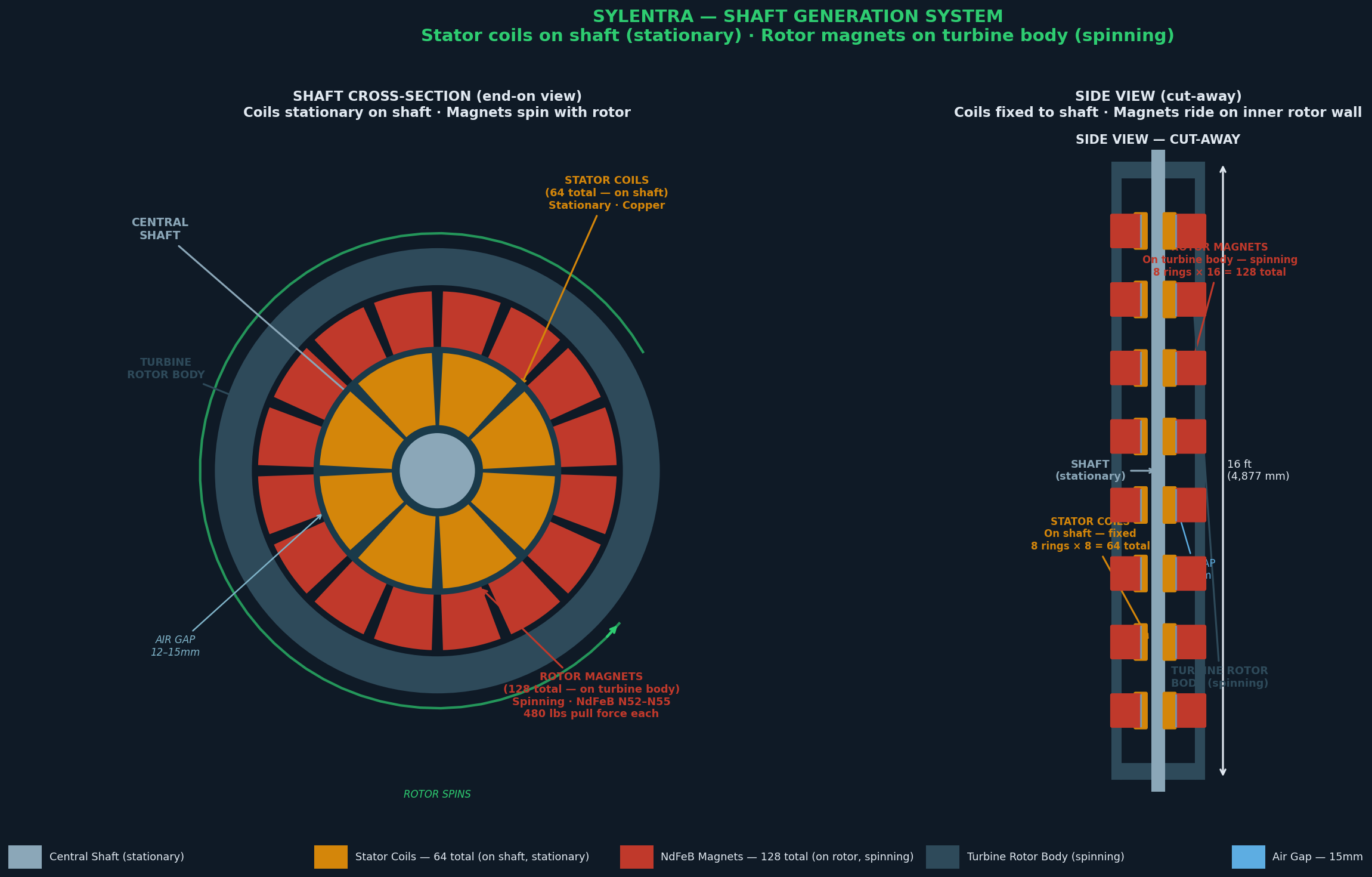
Shaft generation system: 64 stator coils (copper) fixed to shaft · 128 NdFeB magnets (red) on rotor interior · 15mm air gap
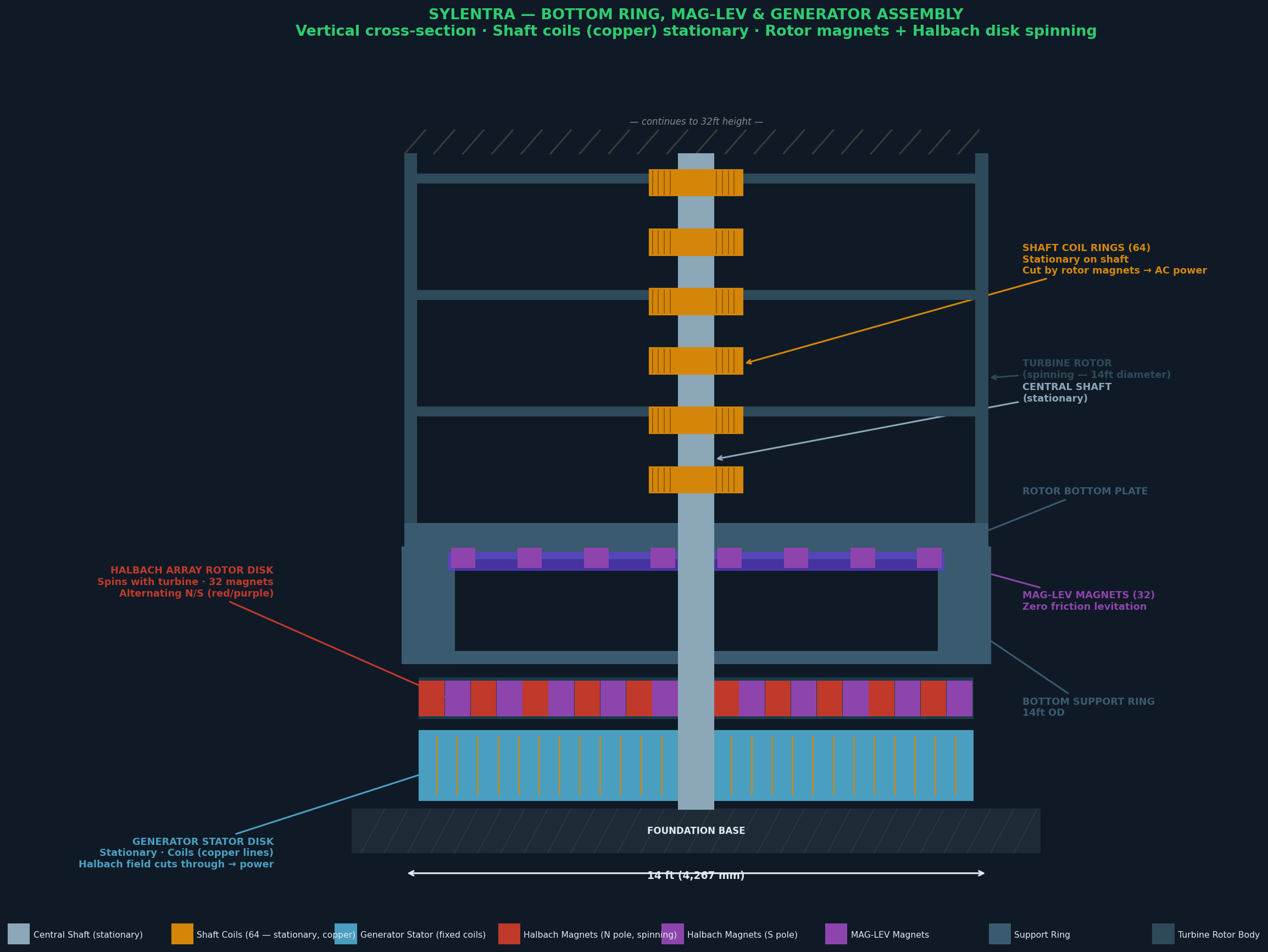
Bottom ring assembly: MAG-LEV magnets (purple) · Halbach array rotor (alternating poles) · Generator stator coils below
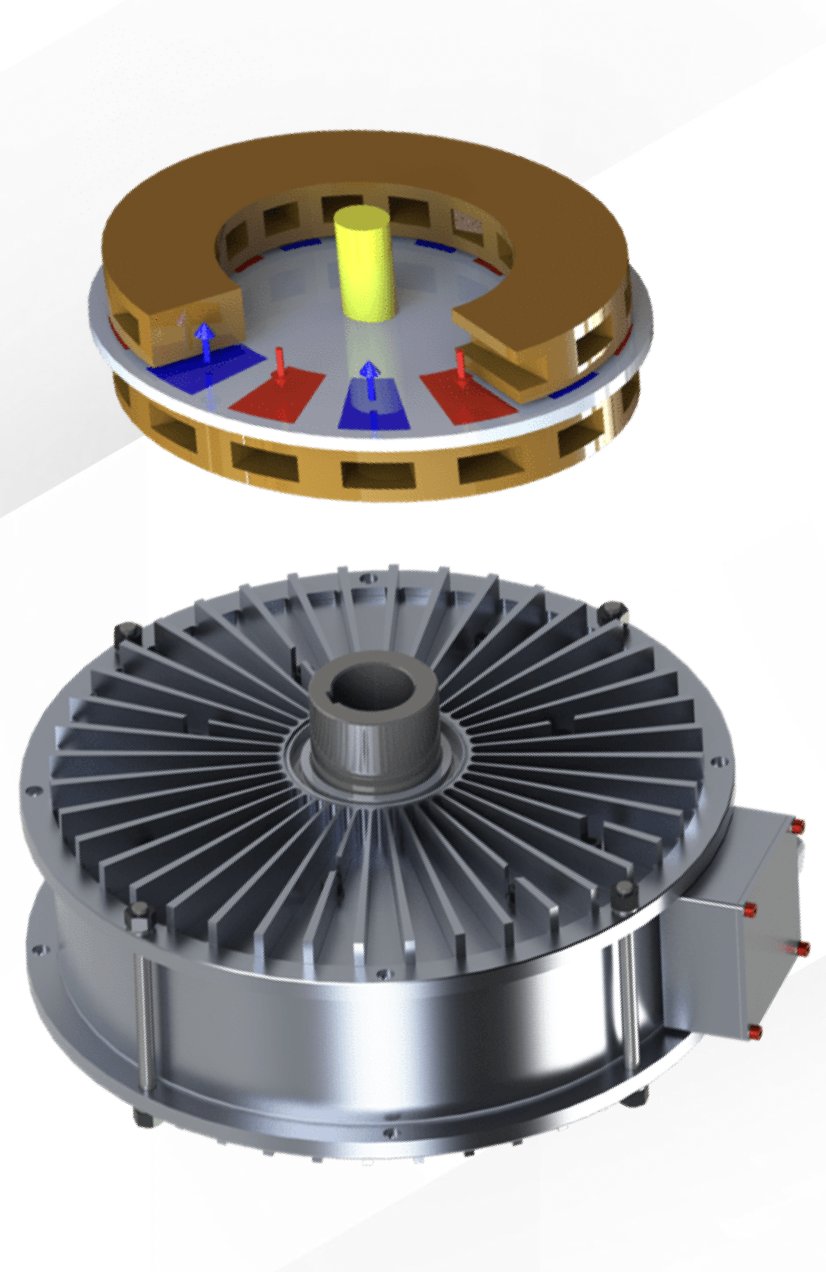
Halbach array — alternating pole configuration (blue/red) · Coreless axial-flux design · 93–95% generator efficiency
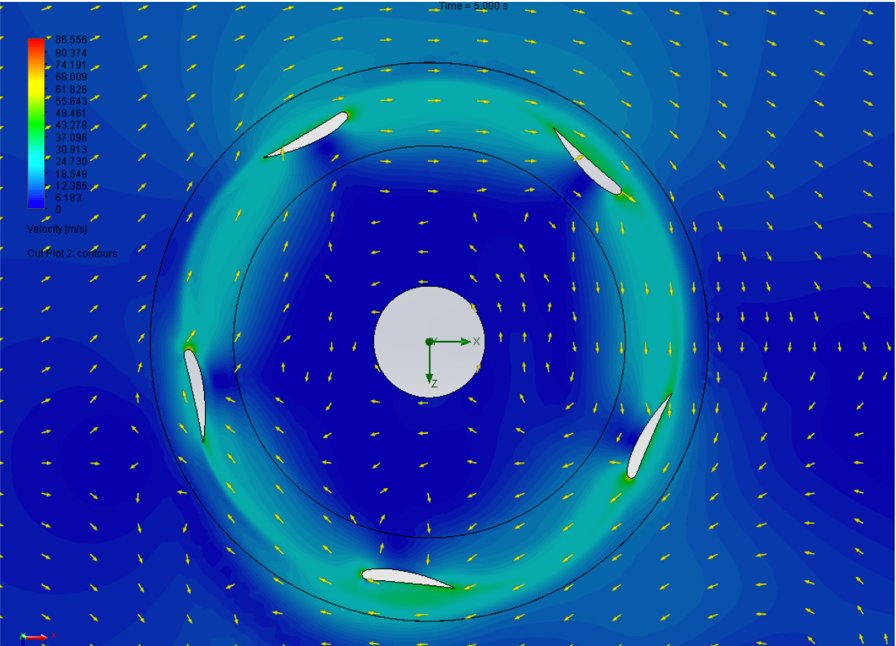
Performance projections are grounded in multi-method validation: computational fluid dynamics (SolidWorks Flow), finite element magnetic analysis (FEMM), AI modeling, and real-world prototype data across five physical units.
CFD velocity simulation — bird's-eye view showing the air drum effect. Each blade flies into the energized wake of the blade ahead — a self-reinforcing loop that exceeds the Betz limit.
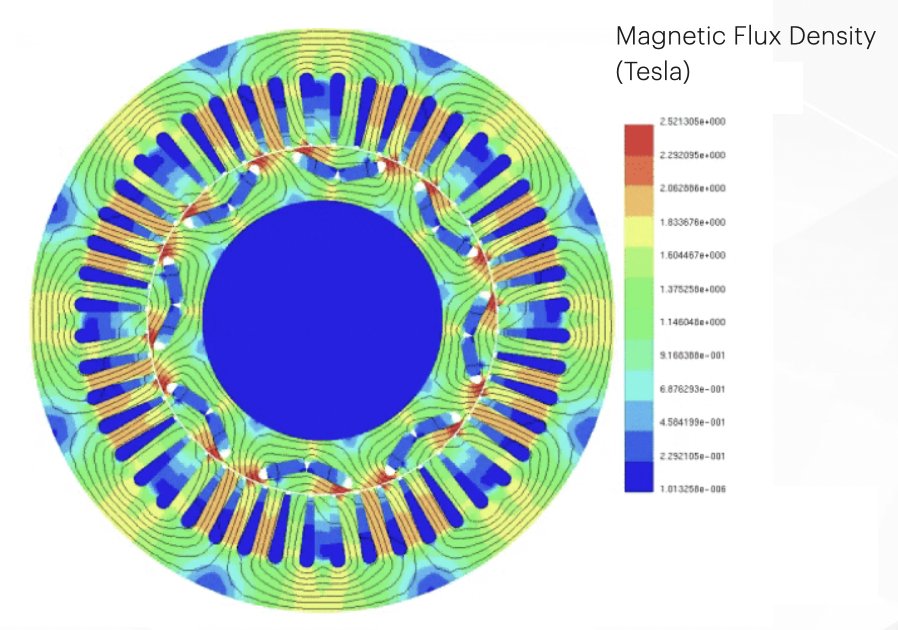
FEMM magnetic flux density analysis — Halbach array field distribution across the generator cross-section. Validates the 93–95% efficiency figure.
Every wind turbine ever built — from the earliest windmill to the most advanced offshore HAWT — uses passive aerodynamics. The blade shape is fixed. The aerodynamics are determined entirely by the geometry of the blade and whatever wind happens to be blowing. Sylentra's EHD Ionic Wind system changes this entirely.
High-voltage electrodes — 10–40kV, milliamp-range current — are embedded directly into each blade's leading and trailing edges. When energized, they ionize the incoming air molecules, creating a controlled ionic flow along the blade surface. This artificially energizes the boundary layer — the thin film of air immediately adjacent to the blade that determines nearly all of the blade's aerodynamic behavior.
The result: the blade operates as if it were moving through faster, denser, more favorable air than actually exists. Stall is delayed. Lift-to-drag ratio increases. The turbine continues generating efficiently at wind speeds that cause every passive design to lose output or shut down entirely.
The power draw is milliamp-range — vanishingly small compared to the output gain of +15–20% power coefficient improvement.
Self-Start Mode
The EHD system generates enough ionic thrust to initiate rotor rotation from complete standstill — zero RPM, zero wind. No motor. No external mechanism. The turbine generates power on a perfectly calm day from nothing but applied voltage. This is why Sylentra's cut-in speed is effectively 0 MPH — the lowest of any turbine design in existence.
Boundary Layer Control Mode
Once spinning, the system transitions to continuous aerodynamic optimization — dynamically adjusting the boundary layer across all operating conditions to maximize power coefficient throughout the full wind speed range. The turbine is, in effect, constantly reshaping its own aerodynamics in real time.
Passive aerodynamics impose a hard physical ceiling on wind turbine performance — the Betz limit, which caps the maximum extractable energy from any passively-designed rotor at 59.3%. Every conventional turbine in the world operates below this ceiling with no mechanism to push against it.
EHD boundary layer control is one of the only known mechanisms capable of operating in the regime beyond passive aerodynamic limits — because it isn't relying on passive aerodynamics. It is actively manipulating the fluid dynamics of the air-blade interaction in real time.
The implications extend far beyond efficiency percentages. The ability to generate at near-zero wind speed — and to do so reliably, automatically, at scale — opens entire categories of deployment that were previously physically impossible: dense urban rooftops, indoor industrial environments, locations with highly variable or calm average wind conditions, and applications requiring guaranteed continuous output regardless of weather.
Three patents protect Sylentra's EHD innovations — and one of them is deliberately material-agnostic. App #64/012,674 protects EHD integration into turbine blades regardless of what the blade is made from. Any competitor — working in carbon fiber, fiberglass, metal, or any other material — who attempts to embed ionic wind electrodes into a turbine blade is infringing Sylentra's IP. There is no workaround. The claim covers the technique, not the material.
Combined with App #64/005,720 (boundary layer control) and App #64/012,670 (self-starting), Sylentra holds an effectively unbreakable monopoly on ionic wind technology in wind turbines. No company can build what Sylentra has built — legally or practically — for the life of these patents.
The bottom line
"Every other wind turbine on earth is waiting for the wind. Sylentra's turbine is creating the aerodynamic conditions it needs — regardless of what the wind is doing. That is not an incremental improvement. It is a different category of machine."
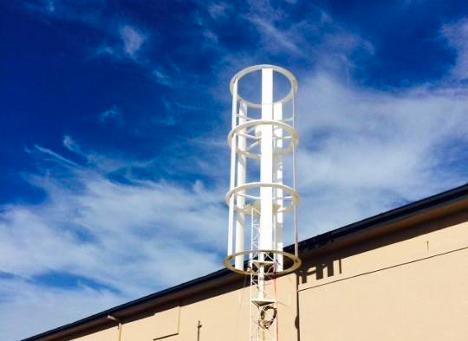
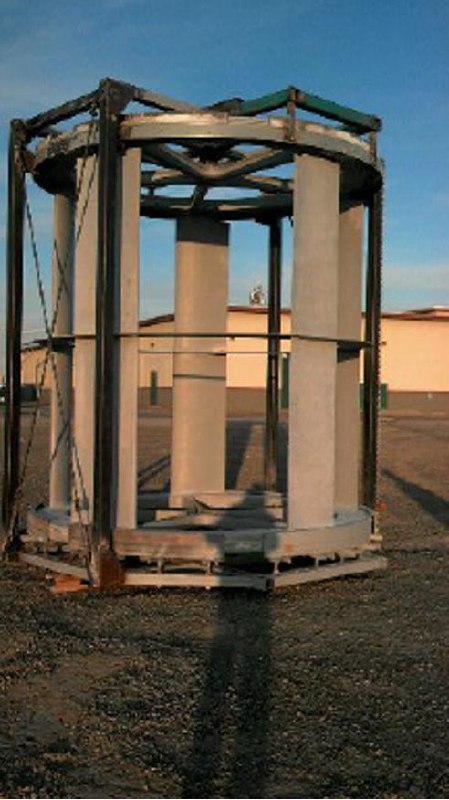
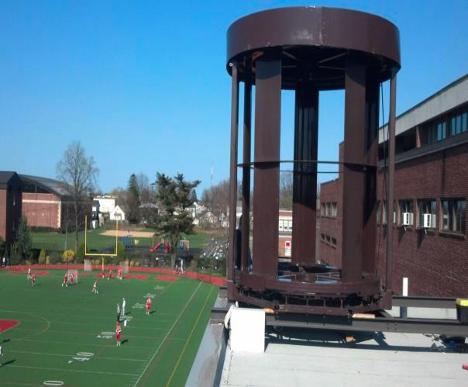
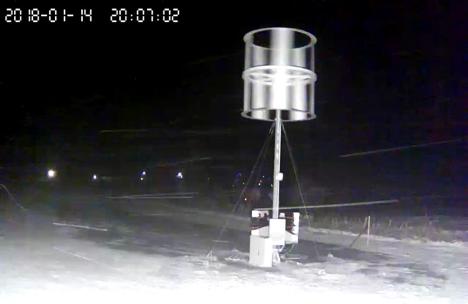
From assembly to deployment: the engineering journey from internal structure to operational rooftop installation, validated in all conditions since 2018.
Removing bearing friction from a wind turbine doesn't just make it quieter — it changes the fundamental economics, deployment constraints, and reliability profile of the entire system.
No mechanical contact means no mechanical noise. The Sylentra turbine produces zero operational sound — enabling installation adjacent to offices, homes, hospitals, and urban data centers where conventional turbines are prohibited.
Designed to operate as a standalone power system, fully independent of the national grid. Provides continuous clean power regardless of grid status — including during outages, extreme weather, and infrastructure attacks.
A critical advantage for national security applications. When a grid-disrupting EMP event disables conventional power infrastructure, Sylentra turbines continue operating — providing uninterrupted power to data centers, hospitals, and command facilities.
Magnetic levitation eliminates the bearings, gearboxes, and friction-based components that account for the majority of conventional turbine maintenance costs and downtime. Dramatically lower lifecycle cost of ownership.
Without the mechanical friction threshold required to initiate rotation, the MAG-LEV turbine begins generating power at wind speeds that stall conventional designs. Productive across a far wider range of conditions.
One conventional turbine requires 50 acres and delivers 2.2MW. 100 Sylentra units fit in that same 50 acres and deliver 100MW — because Sylentra turbines benefit from adjacent airflow rather than fighting wind interference. Deploy at density impossible for any other turbine design.
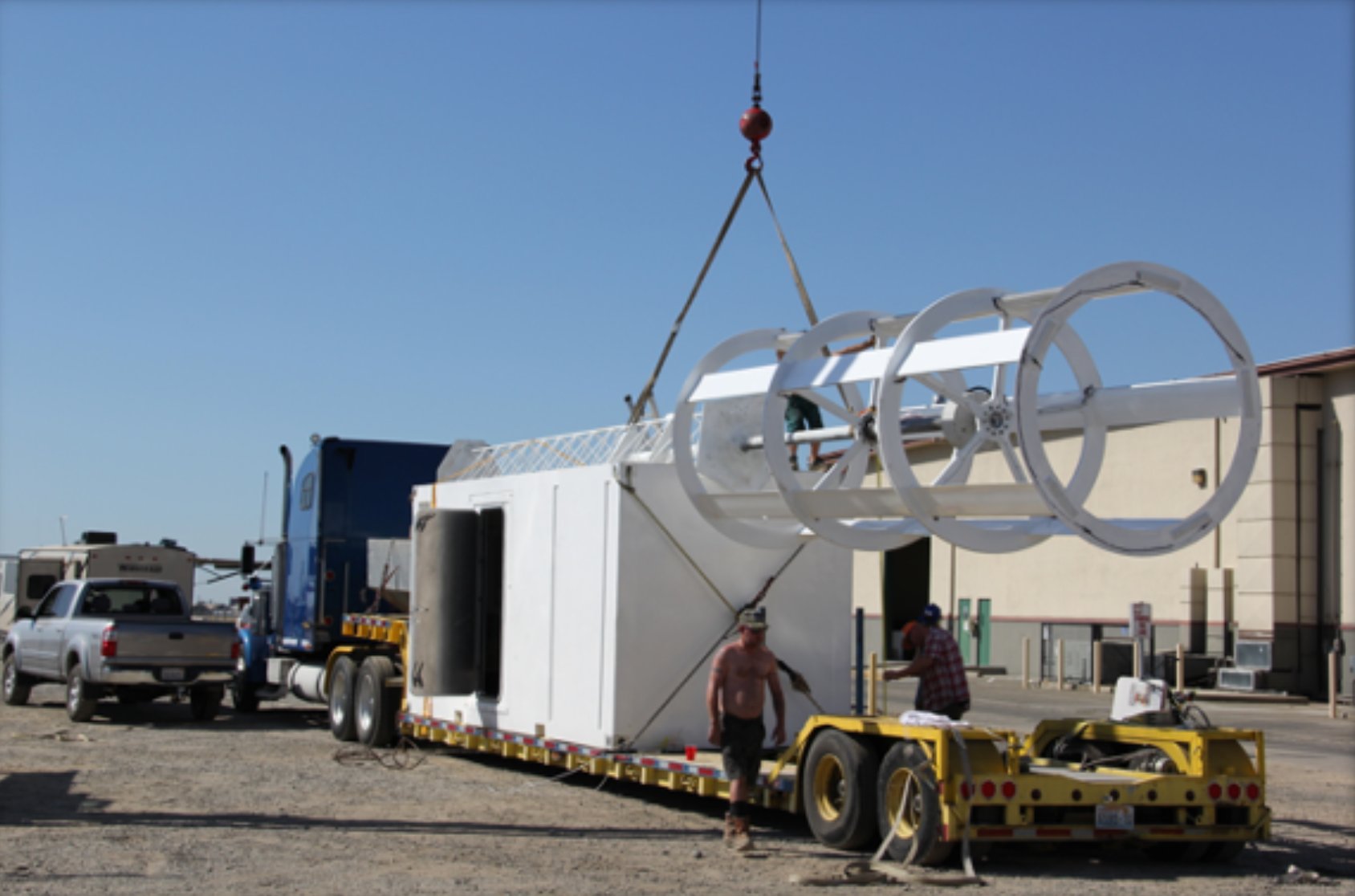
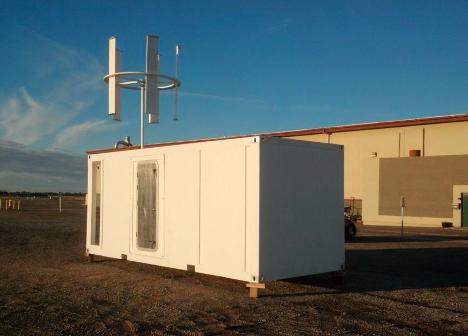
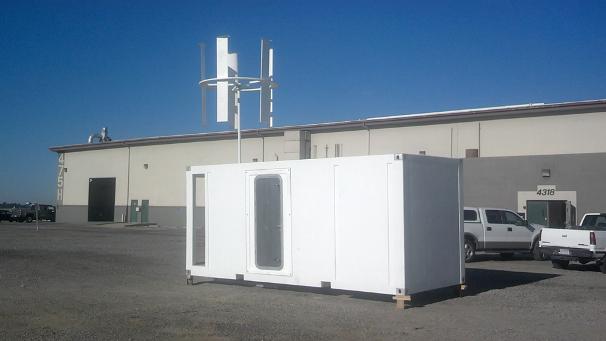
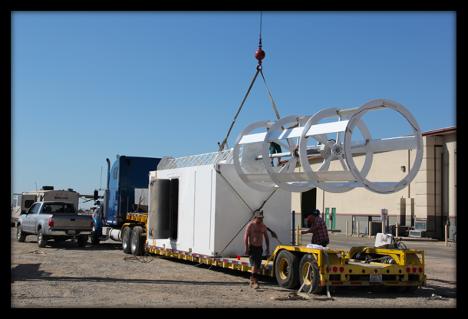
The Sylentra system integrates both technologies into a single deployable unit — a composite modular structure with the MAG-LEV turbine mounted directly on top. Self-contained. Grid-independent. Deployable anywhere in the world.
Two separate integrated units deployed at different sites. The crane shot shows full-scale deployment logistics — this is a real, large-format system actively being moved and installed.
Based on validated design specifications: each 100,000 sq ft of facility produces 1 MW/day of power. Every $50M funds 300,000 sq ft of production capacity — generating approximately 160–200 mW per month.
| Capital Investment | Facility Size | Daily Output | Monthly Output | Approx. Timeline |
|---|---|---|---|---|
| $50M | 300,000 sq ft | 6.6 mW/day | 160–200 mW/month | ~3–4 months |
| $100M | 600,000 sq ft | 13.2 mW/day | 350–400 mW/month | ~4–6 months |
| $200M | 1,200,000 sq ft | 26.4 mW/day | ~700–800 mW/month | ~6–9 months |
*Based on 1 MW output per 100,000 sq ft of facility × 30 days. Facility building costs not included in capital figures. Commercial deployment targeted Q1 2027.
Data centers are the backbone of the digital economy. They require uninterrupted power — and they are acutely vulnerable to grid disruption, extreme weather, and EMP events.
The Sylentra MAG-LEV turbine was designed for exactly this application. Silent enough to install adjacent to urban facilities. Grid-independent by design. EMP-resistant. Scalable to any power requirement.
And deployable — in 2–4 days per unit. Not years. Not months. Weeks.
Investment Details →Grid-independent primary or backup power. Silent campus deployment. EMP-protected.
Critical national infrastructure backup. Compact footprint. Resilient in any weather or emergency.
Silent operation enables deployment in dense urban environments where conventional turbines are prohibited.
Hospitals, command centers, communications hubs — facilities where power interruption is not an option.
Nameplate ratings describe theoretical peaks. Real operators need actual MWh. Here's how Sylentra compares to the alternatives on real-world output.
| Technology | Nameplate | Uptime / Capacity Factor | Actual Monthly Output | Notes |
|---|---|---|---|---|
| Sylentra MAG-LEV | 1 MW | 97%+ uptime · 70% capacity factor | 489 MWh/month | No bearings · No gearbox · 1 MPH cut-in · No upper limit |
| Conventional Wind (HAWT) | 2.2 MW | ~10% at rated · ~30% maintenance downtime | ~320 MWh/month | Shuts down at 17–25 m/s · $100K+/yr maintenance |
| Solar PV | 2 MW | Daylight only · Weather-dependent | ~257 MWh/month | Zero output nights · Seasonal variation |
Projections based on AI modeling, CFD (SolidWorks Flow), FEMM magnetic analysis, and prototype data. Certification and 3rd party validation anticipated late 2026, early 2027.
Five issued US patents (2018–2021) provide active, enforceable protection on the core turbine disc, Halbach generator, and rotor technology. Five provisional patents filed March 2026 lock next-generation EHD and MAG-LEV innovations through March 2027.
Fully granted, active, and enforceable. These patents protect the foundation technology: the turbine disc, Halbach generator, and lightweight rotor system that make Sylentra's 1MW output possible.
The original coreless axial-flux Halbach array generator — 93–95% efficiency, 5% the weight of conventional generators. The architecture that makes 1MW from 14ft possible.
The turbine disc geometry maintaining laminar flow through 360° of rotation — the foundation of the air drum effect and Sylentra's ability to exceed the Betz limit.
Refined Halbach array with coil cartridge isolation — individual segment control, direct-coupled gearbox-free operation, zero cogging, virtually zero maintenance.
Advanced laminar flow disc — complete aerodynamic system for circumferential energy extraction. Validated across multiple prototype scales.
The lightweight rotor system engineered to maintain aerodynamic geometry under centrifugal load at 1MW surface speeds — while staying within standard flatbed transport limits.
2018–2021. Fully active. Enforceable today. The foundation technology is legally locked.
Filed pro se as Micro Entity, March 2026. Priority dates protected through March 2027. These five patents cover every next-generation EHD and MAG-LEV innovation — locking out all competition on future development.
Embedded high-voltage electrodes that ionize incoming air and energize the blade boundary layer — enabling generation at wind speeds that stall all other turbines.
Three independent generation surfaces within a single rotation — compounding output without adding moving parts or mechanical complexity.
The magnetic levitation bearing that eliminates all mechanical contact — the source of 97%+ uptime, zero lubrication, and silent operation.
Self-starts from zero RPM (no wind required) and continuously optimizes aerodynamic efficiency throughout all wind conditions.
Material-agnostic EHD claim — blocks all competitors from integrating ionic wind into turbine blades regardless of blade composition.
Non-provisional filing due March 2027. First-to-file on every next-gen innovation.
Closed molecular crosslink structure engineered. Strength, fire rating, and thermal properties validated.
Vertical axis magnetic levitation architecture designed and refined.
Five smaller-scale MAG-LEV turbine units constructed and tested, validating the core magnetic levitation and composite blade technology.
All five core innovations protected. Priority dates locked through March 2027.
The first full-scale commercial unit — 1 MW per 100,000 sq ft section — is currently being manufactured. Completion targeted late 2026. This is the go-to-market system.
Performance certification of full-scale commercial unit by independent testing authority. Actual output may exceed the modeled 1 MW figure.
Targeted Q1 2027, pending current capital raise. Data center and airport deployments planned as first commercial installations.
The core technology is validated. Five smaller-scale prototypes have proven the concept. The full-scale 1 MW commercial unit is in production now. Investors are funding scale-up at the moment of maximum national need — with commercial deployment targeted Q1 2027.